
**Kanchanaburi’s Memory Stitchers: Piecing Together Railway Tales with Elder Safekeepers in the River Kwai Twilight**
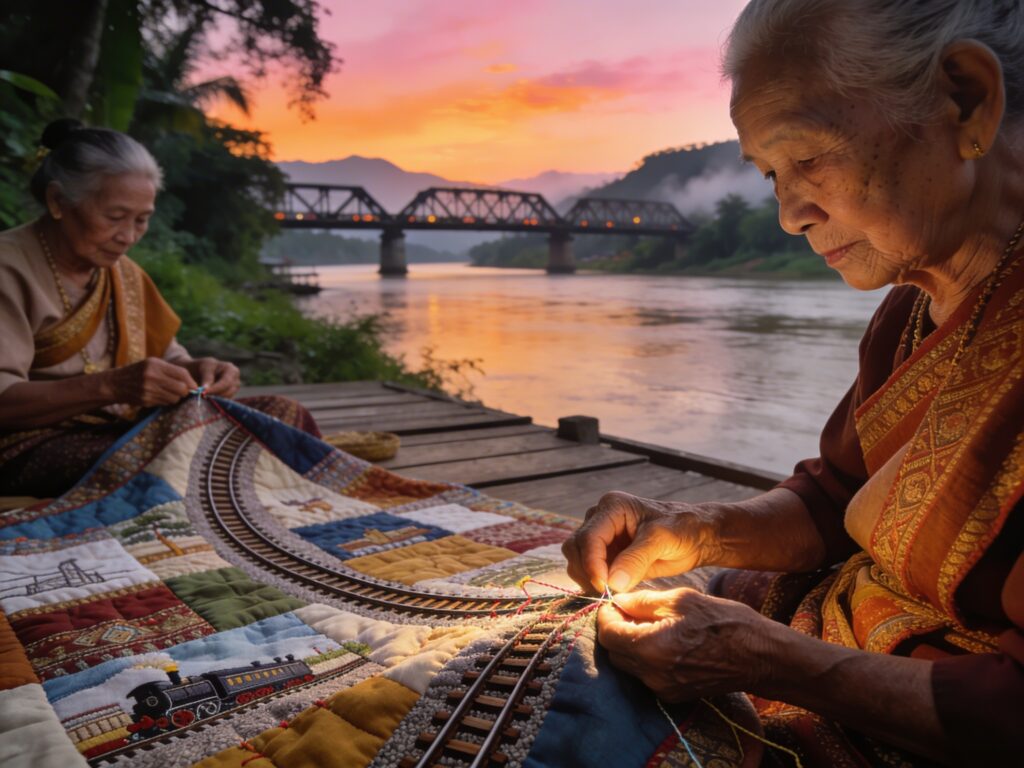
The rhythmic chug of a train crossing the iconic Bridge over the River Kwai is a sound synonymous with Kanchanaburi. Yet, beneath the surface of this famous landmark lies a tapestry of stories, pain, and resilience – threads kept alive not just by museums, but by living human archives. Along the banks of the Kwai, as dusk paints the sky in hues of amber and violet, a profound encounter awaits: listening to the region’s elderly “Memory Stitchers.”
Beyond the Iron: The Human Heart of History
Kanchanaburi’s history is irrevocably tied to the construction of the Thailand-Burma “Death Railway” during World War II. While the bridge and the Hellfire Pass cutting stand as stark physical reminders, the most potent connections are often found in the quiet recollections of those who lived through it or grew up in its shadow. These elders – many now in their twilight years – are the safekeepers, the “Memory Stitchers,” piecing together the fragmented narrative of a dark chapter.
Twilight Tales by the Kwai
Meeting these elders often happens in serene, unassuming settings:
- Riverside Respite: Sitting on weathered wooden benches by the Kwai, the gentle flow of the river providing a poignant soundtrack to their narratives.
- Community Spaces: Small local museums or cultural centers run by descendants, where elders sometimes gather to share.
- Quiet Homestays: Some families running guesthouses incorporate storytelling sessions, offering intimate access to personal histories.
As daylight fades, the atmosphere softens. The harshness of the day gives way to a contemplative mood, perhaps mirroring the elders’ own journey from trauma towards reflection and the desire to bear witness.
The Stitches in the Fabric of Memory
What do these Memory Stitchers share? Their tales are diverse threads:
- Childhood Witnesses: Those who were children during the war, recalling the fear, the strange soldiers, the sounds of construction, and the impact on their villages.
- Descendants’ Duty: Sons and daughters sharing stories passed down from parents or grandparents who worked on the line, endured captivity, or aided prisoners.
- Local Perspectives: Accounts of how the railway altered the landscape, the local economy, and the social fabric of Kanchanaburi forever.
- Acts of Compassion: Often overlooked stories of small kindnesses – locals sharing food, offering shelter, or providing medical aid to suffering prisoners, risking their own safety.
Their voices, sometimes frail but always firm with conviction, add nuance and humanity to the stark statistics. They speak of endurance, loss, unexpected camaraderie, and the slow, painful healing that followed the war.
The Sacred Act of Listening
Engaging with these elders is not a typical tourist activity; it’s a privilege and a responsibility.
- Listen with Respect: Approach with humility and deep respect. This is not performance; it’s the sharing of deeply personal, often painful, history.
- Patience is Key: Stories may unfold slowly, meander, or be interrupted by emotion. Allow the space and time needed.
- Ask Gentle Questions: If appropriate, ask open-ended questions that encourage sharing, but avoid pressing on traumatic details. Follow the elder’s lead.
- Presence Over Pictures: While photos might be permitted (always ask!), prioritize being fully present. The connection and the story are the true takeaways.
- Support Preservation Efforts: Many community museums or cultural groups facilitating these interactions rely on donations or support. Contributing helps ensure these stories continue to be told.
Twilight’s Gift: Connection and Continuity
As the last light fades over the River Kwai and the elders’ stories settle in your heart, the significance of this encounter becomes clear. You haven’t just learned history; you’ve touched its living pulse. These Memory Stitchers are performing an invaluable service, ensuring the human cost of the Death Railway is never forgotten, transforming statistics into souls.
Seeking out these encounters in Kanchanaburi is more than tourism; it’s an act of pilgrimage to the altar of living memory. It reminds us that history’s truest monuments are not always made of steel and stone, but of the stories carefully stitched together and passed on by those who were there, sharing them in the gentle, forgiving light of the River Kwai twilight.
