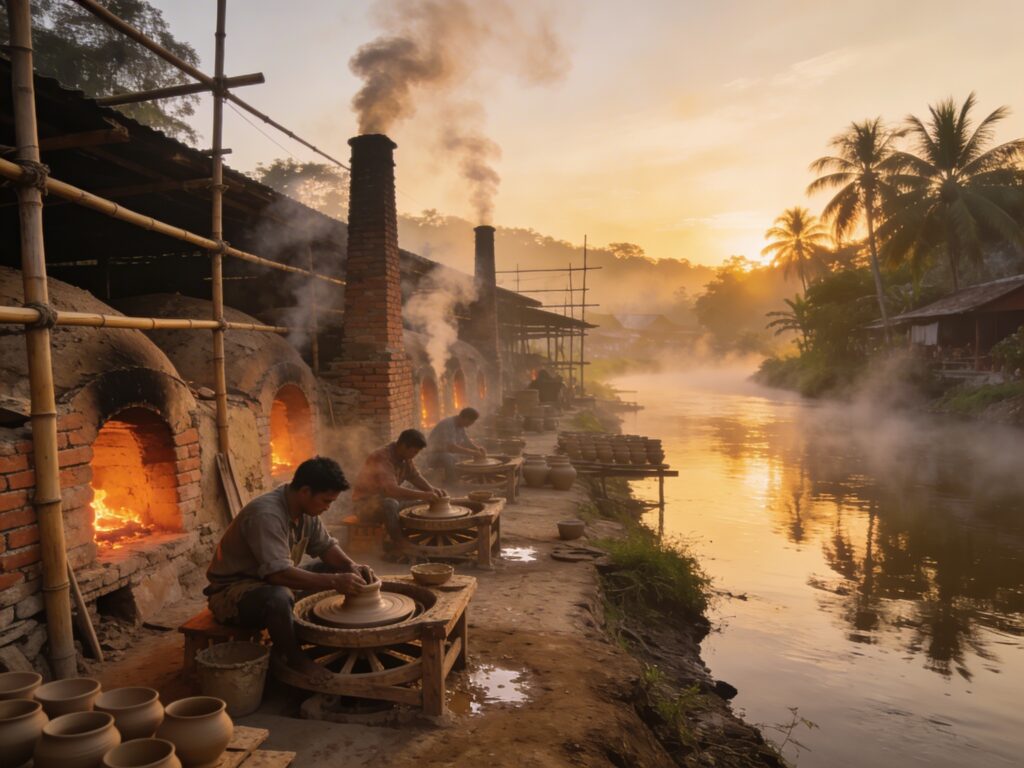
Lampang’s Crackling Kilns: Shaping Celadon Dreams with Dawn Artisans in the Riverbank Ceramic Village.
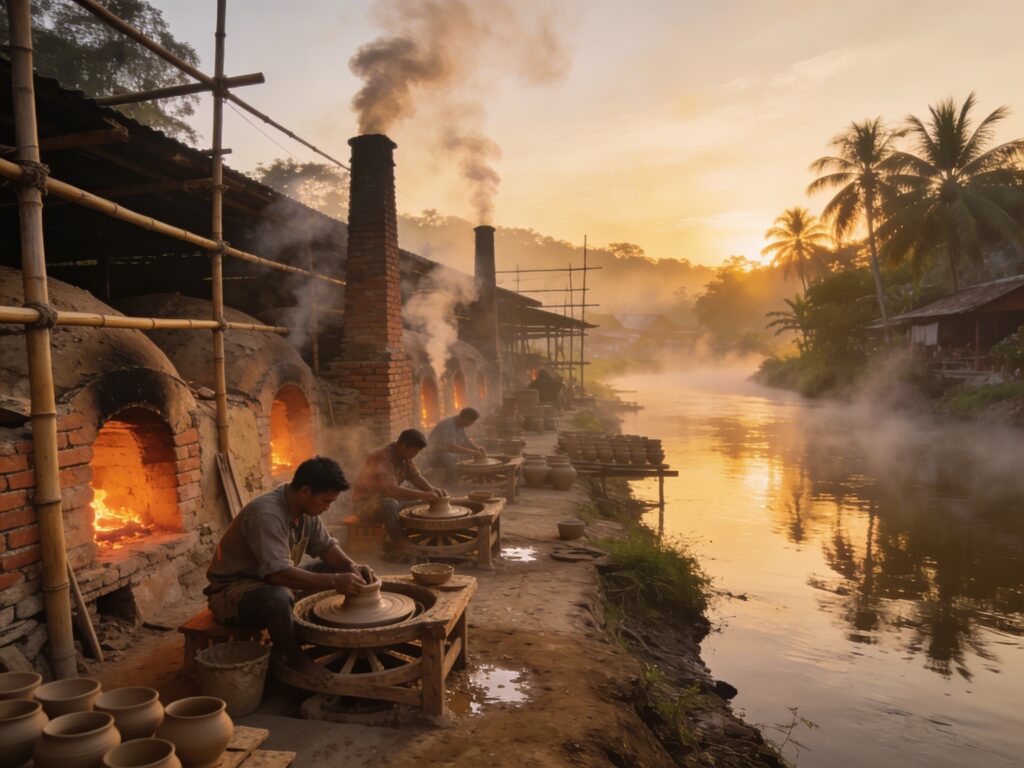
Before Dawn on the Wang River: Where Fire Meets Clay
The first hint isn’t sight, but sound. A low, resonant crackling, like distant thunder trapped in a hearth. Then, the scent – the rich, earthy perfume of woodsmoke mingling with the cool morning air along the Wang River. As the indigo sky begins to soften, the glow becomes visible: the fiery mouths of ancient kilns, breathing life into dreams of jade-green celadon. This is Lampang’s hidden heartbeat, the riverbank ceramic village near Wat Phra Kaeo Don Tao, where dawn belongs to the artisans.
A Legacy Forged in Flame
Lampang’s ceramic tradition stretches back centuries, deeply intertwined with Burmese influences during the Lanna period. But the village along the Wang River, particularly around the revered Wat Phra Kaeo Don Tao, has become synonymous with the exquisite art of celadon pottery. This isn’t mass production; it’s a living heritage, passed down through generations. The crackling kilns, often traditional wood-fired dragon kilns or smaller, efficient modern variations, are the crucibles where raw clay transforms into objects of timeless beauty.
- The Crackle Craze: That signature sound? It’s the kiln working its magic. Wood firing creates unique temperature fluctuations and ash deposits that interact with the glaze, often resulting in the prized ‘crackle’ effect – a delicate network of fine lines cherished by collectors worldwide.
- Celadon’s Allure: Lampang artisans have mastered the subtle variations of celadon glaze, ranging from pale sea-green to deep, lustrous olive. Achieving this perfect hue requires precise control of the kiln atmosphere and temperature, a skill honed over decades.
The Dawn Artisans: Keepers of the Flame
Visiting at dawn isn’t just atmospheric; it’s essential to witness the process. The firing cycle often peaks in the coolest hours before sunrise. You’ll find the artisans – masters and apprentices alike – moving with quiet focus:
- Stoking the Fire: Carefully feeding seasoned hardwoods into the kiln’s maw, constantly monitoring the temperature through peepholes, reading the flames like a language.
- The Crackle Watch: Listening intently to the sounds emanating from the kiln, interpreting the crackles and pops to gauge the progress and health of the firing.
- Glowing Anticipation: The air thrums with heat and potential. Each firing is an act of faith; weeks of meticulous shaping, drying, glazing, and stacking culminate in this intense, transformative fire.
These aren’t just workers; they are custodians of an ancient craft. Their hands, dusted with clay and ash, carry knowledge passed down, ensuring each piece retains the soul of Lanna ceramic artistry.
Beyond the Kiln: Exploring the Village
As the sun rises and the kilns begin their slow cooling, the village awakens fully. Wander the narrow lanes:
- Workshop Wonders: Peer into open workshops where artisans hand-throw or mold clay on wheels, painstakingly apply glazes, and carve intricate designs. Many welcome respectful observation.
- Gallery Treasures: Browse numerous small galleries and family-run shops lining the riverbank. Discover stunning celadon tableware, decorative vases, intricate figurines, and unique contemporary pieces.
- Wat Phra Kaeo Don Tao: This historic temple complex, once housing the Emerald Buddha, is a focal point. Its architecture and surroundings beautifully complement the ceramic heritage of the area.
Experiencing the Ceramic Soul of Lampang
A visit to Lampang’s riverbank ceramic village is more than souvenir shopping; it’s an immersion into a living craft tradition:
- Timing is Key: Aim to arrive **before sunrise** (around 5:00 AM – 6:30 AM) for the most atmospheric and active kiln-firing viewing. The village remains lively throughout the day.
- Engage Respectfully: Observe quietly, ask permission before taking close-up photos of artisans working, and show genuine interest. A smile and a simple “Sawasdee” go a long way.
- Take Home a Treasure: Purchasing directly from the workshops supports the artisans and their heritage. Each crackled celadon piece carries the unique imprint of the fire and the maker’s hand.
Standing by the Wang River as dawn breaks, listening to the ancient song of the crackling kilns, you witness more than pottery being made. You witness dreams shaped in clay, fired by dedication, and cooled by the river breeze – the very essence of Lampang’s enduring ceramic spirit.