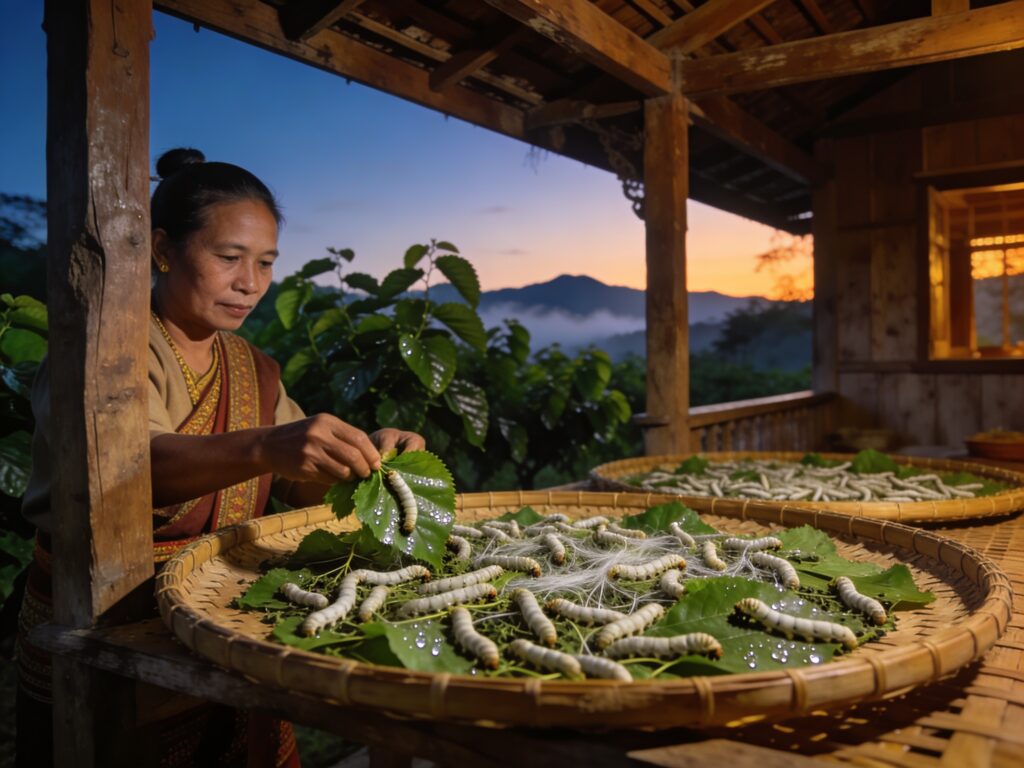
Lamphun’s Silken Sunrise: Feeding Mulberry Leaves to Hungry Silkworms in a Teak Villa’s Dawn Glow at 5am
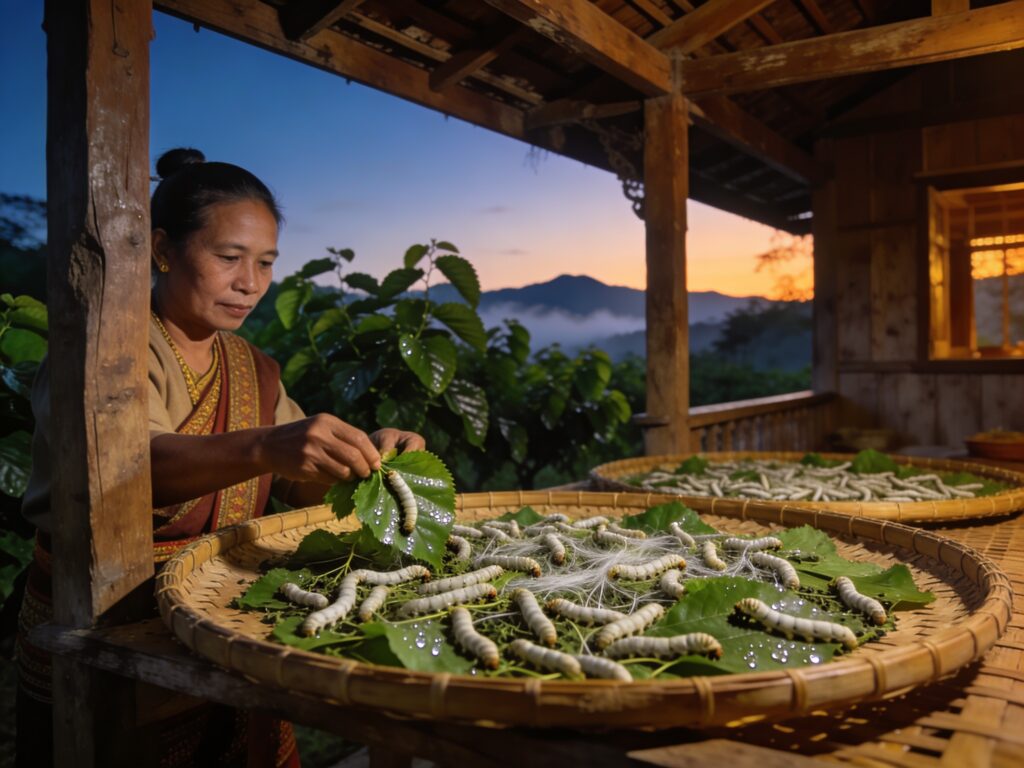
The Hushed Ritual: Dawn with Lamphun’s Silkworms
Before the first rooster crows, before the monks begin their alms rounds, and while the stars still cling faintly to the velvet sky, Lamphun stirs with a different kind of devotion. Deep within the weathered, fragrant embrace of a century-old teak villa, a delicate symphony unfolds – the sound of countless tiny jaws munching on fresh mulberry leaves. This is the sacred pre-dawn ritual of feeding silkworms, an intimate glimpse into the very genesis of Thailand’s legendary silk, best experienced in the cradle of it all: Lamphun.
Answering the Call Before Sunrise
5:00 AM in Lamphun feels less like an hour and more like a threshold. The air is cool, damp with dew, and carries the distinct, earthy scent of teak wood and fertile soil. Inside the villa, shielded from the lingering night, soft lights reveal row upon row of bamboo trays. Upon them, nestled in clean, woven mats, writhe thousands upon thousands of creamy-white silkworms. They are Bombyx mori, the domestic silkworm, and at this precise hour, they are ravenous.
This isn’t just feeding time; it’s a biological imperative. Silkworms eat almost continuously during their larval stage, but their metabolism peaks in the cooler hours before dawn. Feeding them now, with leaves still crisp and cool from the night air, ensures optimal growth and, crucially, the finest quality silk they will soon spin.
The Mulberry Harvest: Nature’s Silk Currency
The leaves are everything. Bundles of fresh, tender mulberry leaves, hand-picked just hours before, are brought in, glistening with dew. The connection between mulberry and silk is absolute. Silkworms are monophagous – they eat *only* mulberry leaves. The quality, variety, and freshness of these leaves directly impact the health of the worms and the luster, strength, and texture of the silk filament they produce.
Watching the caretakers (often women whose families have nurtured silkworms for generations) deftly distribute the leaves is mesmerizing. Their hands move with practiced grace, gently laying the green bounty over the seething mass of worms. The sound that erupts is immediate and surprisingly loud – a soft, persistent, rustling crunch, like gentle rain on dry leaves amplified a thousandfold. It’s the sound of pure, industrious consumption.
Amidst Teak and Tradition: A Setting Steeped in History
Experiencing this in a traditional Northern Thai teak villa elevates it beyond mere observation. Lamphun, Thailand’s oldest recorded kingdom (once known as Hariphunchai), is steeped in history. These teak structures, with their intricate carvings, high ceilings, and wide verandas, speak of a time when silk was a royal treasure. The villa itself becomes part of the narrative – the cool, stable environment it provides is ideal for the sensitive silkworms. As the first hints of dawn begin to filter through the slatted windows, painting the aged teak in warm hues of gold and amber, the scene takes on an almost ethereal quality. The soft crunching continues, a rhythmic counterpoint to the growing light.
Beyond the Feeding: Understanding the Sacrifice and the Silk
This dawn ritual is just one poignant moment in a short, intense life cycle dedicated solely to silk production. Witnessing this quiet dedication fosters a deep appreciation for the incredible journey:
- The Metamorphosis: These voracious larvae will soon stop eating, find a corner, and begin spinning their cocoons – a single, continuous filament that can stretch up to a kilometer long.
- The Sacrifice: To harvest the silk intact, the pupa inside the cocoon is typically stifled before it emerges as a moth. This inherent sacrifice underscores the preciousness of real silk.
- Lamphun’s Legacy: This region, particularly around villages like Ban Nong Jok and Ban Hong, has preserved intricate techniques, from specific mulberry varieties to unique reeling and weaving methods, producing silks renowned for their softness and distinctive textures.
Experiencing Lamphun’s Silken Dawn
Finding this experience requires seeking out authentic sericulture farms or community centers in Lamphun that welcome respectful visitors. It’s not a staged show; it’s participation in a vital daily task.
- Book Ahead: Arrange visits through specialized tour operators focusing on cultural immersion or contact community tourism initiatives in Lamphun directly.
- Respect the Ritual: Be quiet, follow instructions carefully, move slowly, and ask permission before taking photos (flash is strictly prohibited).
- Dress Appropriately: Wear clean, modest clothing. Some farms may require removing shoes or covering hair.
- Timing is Crucial: Be punctual! Arriving at 5:00 AM means witnessing the peak activity.
- Seasonality: Silkworm rearing often happens year-round but in batches. Confirm availability before traveling specifically for this.
A Sunrise Revelation
Leaving the teak villa as the sun fully crests the horizon, the ordinary world of Lamphun waking up feels somehow different. That soft, persistent crunching sound lingers in your memory. You’ve witnessed the first, fundamental step where nature’s green leaf, consumed in the quiet darkness before dawn, is miraculously transformed into the foundation of shimmering cloth. It’s a humble, profound act connecting you to centuries of tradition and the very essence of why Lamphun remains the true heart of Thailand’s silken soul. It’s not just about feeding worms; it’s about nurturing the beginning of a thread that weaves together history, culture, and breathtaking beauty.