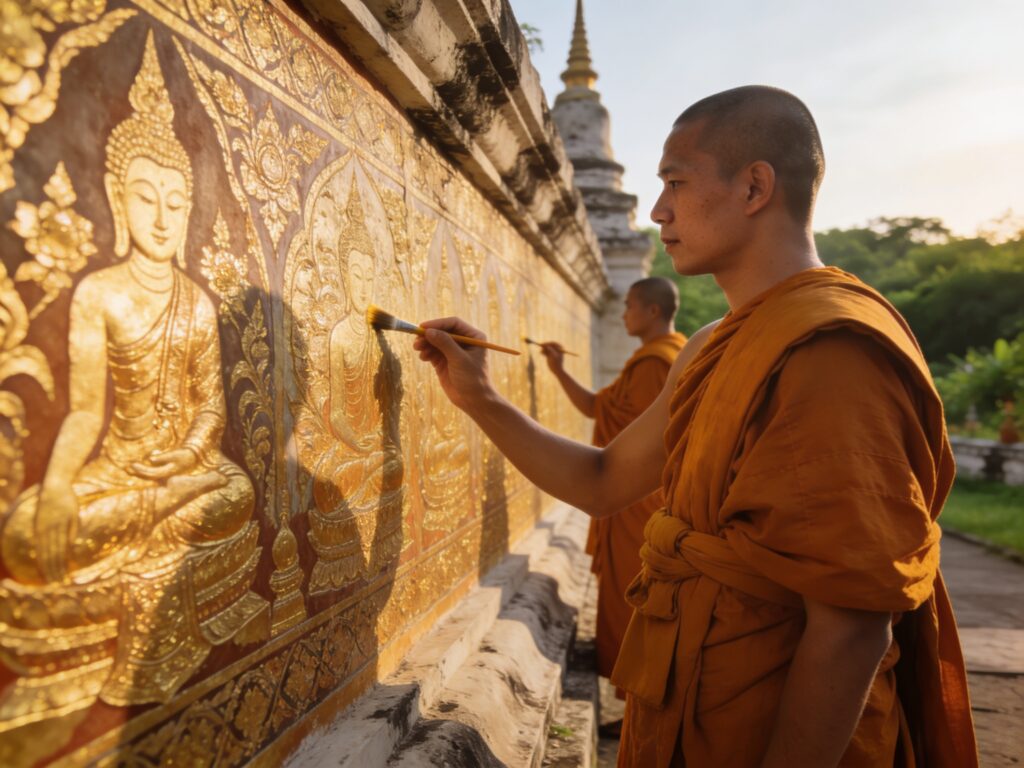
Saraburi’s Whispering Walls: Tracing Gold Leaf Temple Murals with Monk Guides in the Late Morning Sunlight
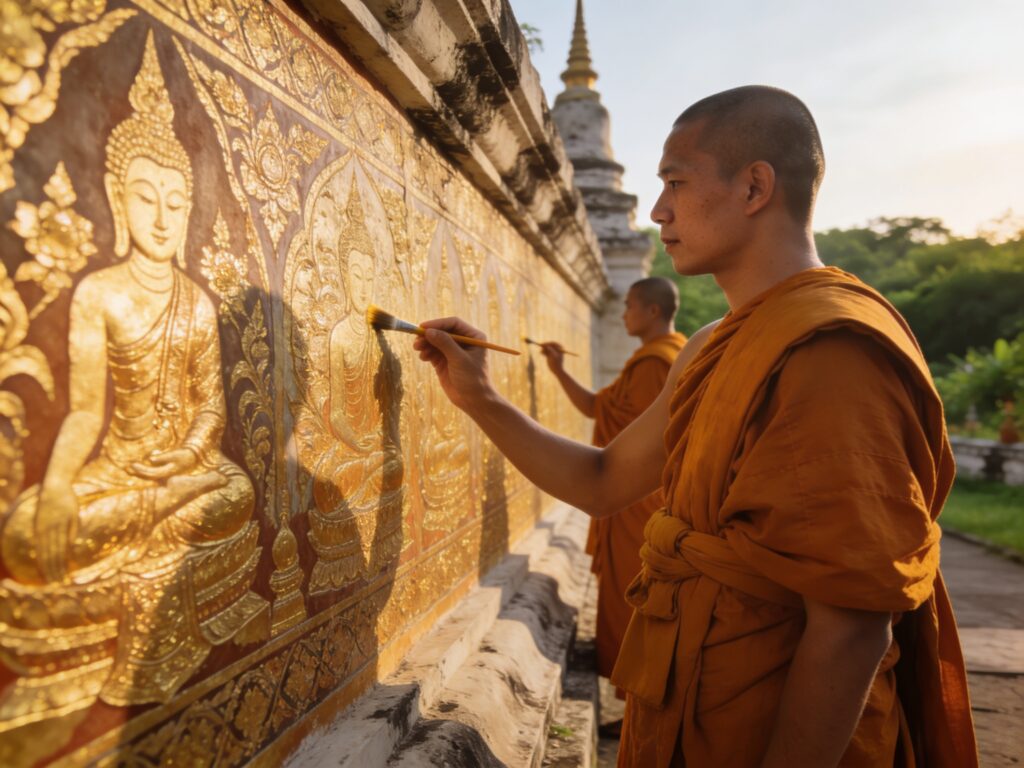
The Gilded Whispers of Saraburi
While many travellers speed past Saraburi on the highway towards more famous destinations, those who linger discover a profound secret: ancient temple walls that shimmer with stories, literally whispered into being with gold. This central Thai province, often overlooked, holds sanctuaries where artistry and spirituality converge in breathtaking gold leaf murals, best experienced in the gentle embrace of late morning sunlight with the guidance of resident monks.
Where Gold Leaf Breathes Life into Ancient Tales
Saraburi’s temples, particularly the revered Wat Phra Phutthabat (home to the sacred Buddha’s Footprint) and the exquisite Wat Tham Krabok, safeguard stunning examples of traditional Thai mural painting. What sets many Saraburi murals apart is the masterful, intricate use of gold leaf (tông daeng). Applied painstakingly by skilled artisans over generations, the gold isn’t merely decorative; it illuminates celestial realms, highlights divine figures like the Buddha and heavenly beings (thevada), and creates an ethereal luminosity that transforms the temple walls into sacred storybooks.
As the late morning sun streams through temple windows and open doorways, something magical happens. The low-angled sunlight catches the raised, textured gold leaf. The murals seem to awaken. Scenes depicting the Jataka tales (stories of the Buddha’s past lives), episodes from the Ramakien (Thai Ramayana), or intricate cosmological diagrams begin to shimmer and shift. Details hidden in shadow emerge, figures appear to move, and the entire space fills with a warm, divine radiance. This is when the walls truly begin to “whisper.”
The Wisdom of Monk Guides: Unlocking the Murals’ Secrets
Experiencing these murals alone is impressive, but understanding them deeply requires a key. That key is often a resident monk. Many temples in Saraburi, especially those less frequented by international tourists, have monks who possess deep knowledge of their temple’s history and artwork. Arranging a quiet moment with one, often possible through polite inquiry at the temple office or simply respectful observation, opens a door to profound insight.
Imagine standing before a complex mural bathed in golden light:
- A monk gently points out a subtle detail – perhaps a specific mudra (hand gesture) signifying compassion, or a minor character symbolizing a local legend.
- He explains the significance of the gold leaf: its imperishable nature representing enlightenment, its luminosity symbolizing the dispelling of ignorance.
- He shares the stories behind the scenes, bringing the static images to life with the narratives of virtue, sacrifice, and cosmic order that shaped Thai Buddhist culture.
- He contextualizes the artistry – the techniques used, the eras represented, and the dedication involved in their creation and preservation.
This isn’t a rehearsed tour; it’s a personal sharing of faith and heritage. The monk’s calm narration, often in soft Thai (sometimes with basic English or aided by a willing translator from the temple community), adds a layer of reverence and authenticity impossible to find in guidebooks.
The Late Morning Advantage: Chasing the Golden Light
Timing is crucial for the full “Whispering Walls” experience. Late morning (roughly 9:30 am to 11:30 am) offers the perfect conditions:
- Optimal Light: The sun is high enough to penetrate the temple interiors effectively but not yet at its harsh, overhead zenith. This oblique angle creates dramatic shadows and highlights, making the gold leaf dance and reveal its intricate textures.
- Serene Atmosphere: The bustle of early morning merit-making has often subsided, and the intense heat of the afternoon hasn’t yet arrived. Temples are quieter, allowing for contemplative observation and easier conversation with monks.
- Monk Availability: Morning chanting and duties are usually completed, making monks more likely to be available for a brief, unhurried interaction.
Embracing the Experience: Practical Tips
To respectfully trace Saraburi’s whispering walls:
- Dress Modestly: Shoulders and knees covered for all visitors (sarongs/shawls often available for loan).
- Enter Quietly: Temples are active places of worship. Remove shoes before entering viharn (assembly halls) or ubosot (ordination halls).
- Seek Guidance Respectfully: Approach a monk or temple attendant politely. A simple “wai” (pressed palms bow) and asking “Pôot pasa angrit dâi mái kráp/ka?” (Can you speak English?) or inquiring about the murals (“fá phâen din”) is a good start. A donation to the temple is customary for a monk’s time.
- Focus on Wat Phra Phutthabat & Wat Tham Krabok: These are prime locations, but smaller, lesser-known temples in the province might hold surprising treasures – be open to exploration.
- Bring Patience & Curiosity: Allow the experience to unfold naturally. Let the light play, listen to the monk’s insights, and absorb the serene atmosphere.
Saraburi’s gold leaf temple murals are more than just art; they are luminous scriptures etched onto walls, holding centuries of faith, artistry, and cultural memory. To witness them in the late morning sun, guided by the gentle wisdom of a monk, is to engage in a silent dialogue with history and spirit. It’s a reminder that Thailand’s most profound treasures often lie not in the crowded highlights, but in the quiet, golden whispers of places like Saraburi.