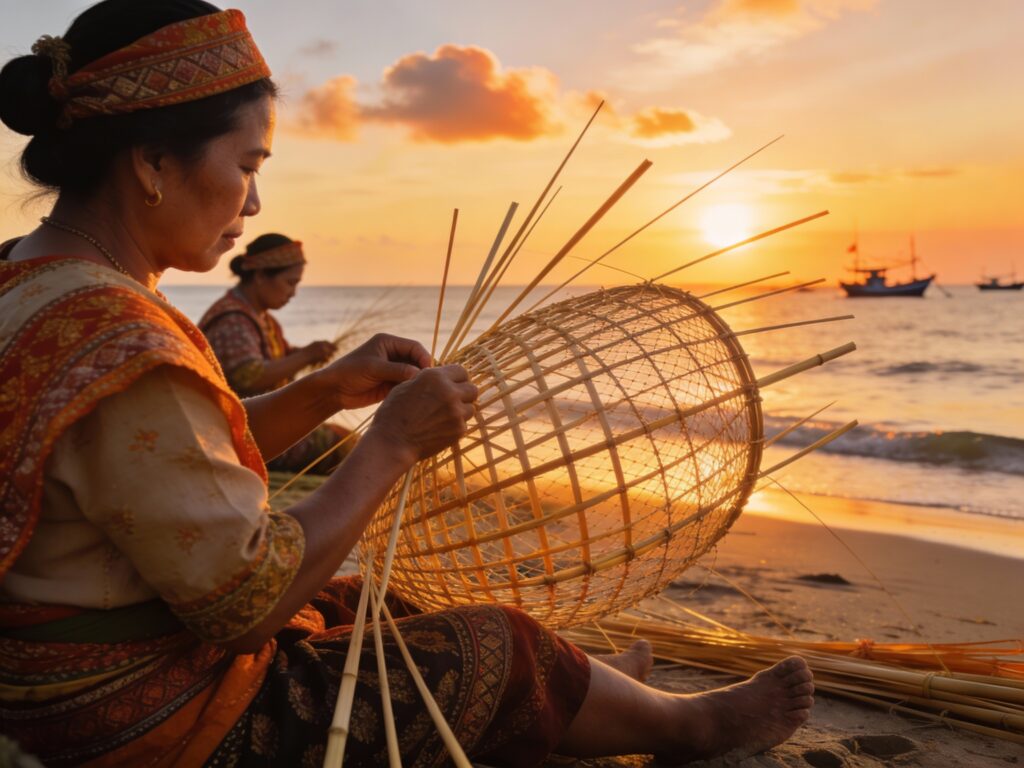
**Phetchaburi’s Salty Stitches: Weaving Bamboo Fish Traps at Cha-am’s Sunrise Shoreline**
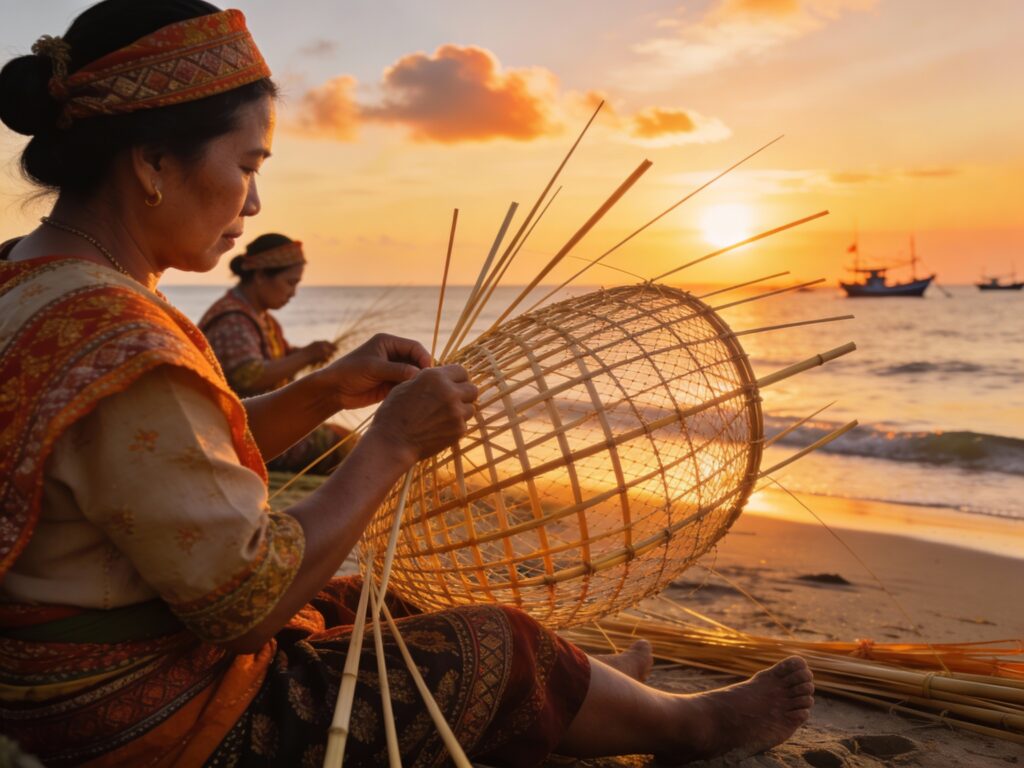
The first blush of dawn paints the sky in hues of apricot and rose over Cha-am Beach. While most visitors are still asleep or sipping their first coffee, a different kind of magic unfolds along the water’s edge. Here, in Phetchaburi province, just south of the famous resort town, a centuries-old tradition breathes with the salt air: the meticulous weaving of bamboo fish traps, known locally as “Lop” or “Uan“. This is where artistry meets necessity, where the rhythm of the waves syncs with the deft movements of weathered hands.
More Than Just Catches: A Legacy Woven in Bamboo
These intricate traps aren’t mass-produced plastic contraptions; they are functional sculptures born from generations of knowledge passed down through coastal communities. Primarily used by small-scale, traditional fishermen, the bamboo fish trap is a testament to sustainable ingenuity. Crafted from locally sourced bamboo, they are biodegradable, species-selective (allowing smaller fish to escape), and represent a low-impact fishing method deeply connected to the local ecosystem.
The Artisans of the Dawn
Seek them out in the soft, cool light of early morning, often before the beach crowds arrive. You’ll find small groups, usually experienced elders or dedicated local fishermen, gathered near the shoreline or under the shade of Casuarina trees. Their tools are simple but effective:
- Sharp Knives/Machetes: For splitting and shaping the bamboo.
- Strong, Flexible Bamboo Strips: The fundamental material, often pre-soaked for pliability.
- Measuring Sticks or Templates: Ensuring consistency in size and shape.
- Years of Experience: The most crucial tool of all.
The Dance of Weaving
Watching them work is mesmerizing. Fingers, often calloused and stained by years of salt and sun, move with surprising speed and precision. The process involves:
- Splitting & Preparing: Bamboo poles are expertly split into thin, uniform strips.
- Creating the Frame: Stronger strips form the cylindrical or conical skeleton of the trap.
- The Intricate Weave: Thinner, more pliable strips are woven horizontally through the vertical frame strips. The weave is incredibly tight, designed to hold fish but allow water flow. This is the “salty stitch” – each twist and tuck perfected over a lifetime.
- Forming the Funnel: A cleverly woven inward-pointing funnel entrance allows fish to swim in but makes escape difficult.
- Final Touches: Securing the weave, adding weights or floats, and sometimes reinforcing key points.
It’s a rhythmic, almost meditative process. The shush of the waves provides the soundtrack, the salty breeze carries the scent of the sea and fresh bamboo, and the rising sun bathes the scene in golden light.
Why the Sunrise Shoreline?
There’s practicality and poetry in their choice of time and place. The cool morning air makes the physical work more bearable before the intense heat sets in. The bamboo is often more pliable in the humid dawn air. But beyond practicality, there’s a profound connection. This is when the fishermen would traditionally set their traps or check their catches. Working by the water connects the weavers directly to the element where their creations will be used. The tranquility of the early hours also offers a peaceful, focused environment for this demanding craft.
Witnessing the Salty Stitches: A Traveler’s Experience
Encountering this tradition is a privilege. Here’s how to approach it respectfully:
- Timing is Everything: Arrive at Cha-am Beach very early, ideally between 5:30 AM and 7:30 AM.
- Look Beyond the Resorts: Head towards the less developed, quieter stretches of the beach, particularly towards the southern end near fishing communities.
- Observe Quietly: Approach gently. A smile and a polite “Sawasdee krap/ka” (Hello) go a long way. Watch from a respectful distance initially.
- Ask Permission: If they seem open and not too engrossed, gesture politely to ask if you can take photos. A nod and smile are usually sufficient consent. Never use flash.
- Respect the Work: Avoid touching the traps or materials unless explicitly invited. These are functional tools, not just tourist props.
- Support Local: If they have finished traps for sale, consider purchasing one. It’s a beautiful, authentic souvenir that directly supports the tradition. Prices are usually very reasonable.
A Fading Art, A Precious Sight
Like many traditional crafts, bamboo fish trap weaving faces challenges. Mass-produced nets, changing fishing regulations, and the allure of easier jobs for younger generations threaten its continuity. Seeing these artisans at work, their hands moving with unconscious skill honed over decades, feels like witnessing a living museum piece. Each trap woven is a stitch holding together a piece of Phetchaburi’s coastal heritage.
So, set your alarm early on your next Cha-am visit. Trade an extra hour of sleep for the golden light of dawn and the chance to witness the quiet mastery of Phetchaburi’s salty stitches. It’s a glimpse into the soul of the coast, where bamboo bends to the will of tradition, and the sea’s bounty is captured, one careful weave at a time.