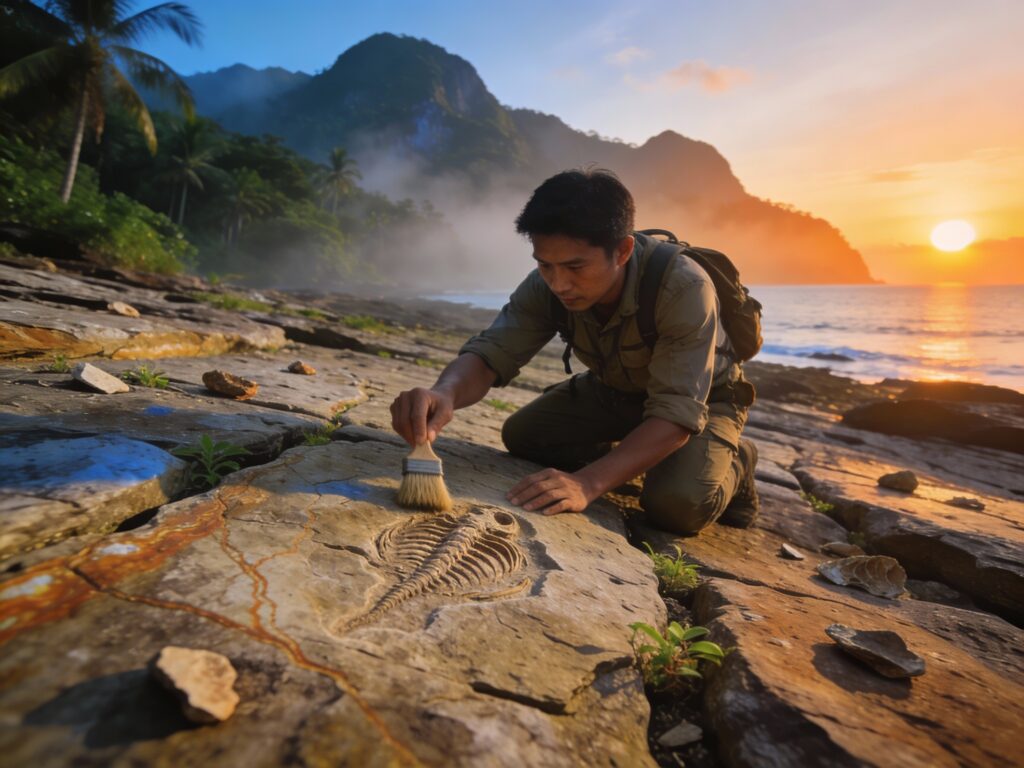
Satun’s Stone Secrets: Fossil Hunting at Dawn in Tarutao’s Ancient Beds
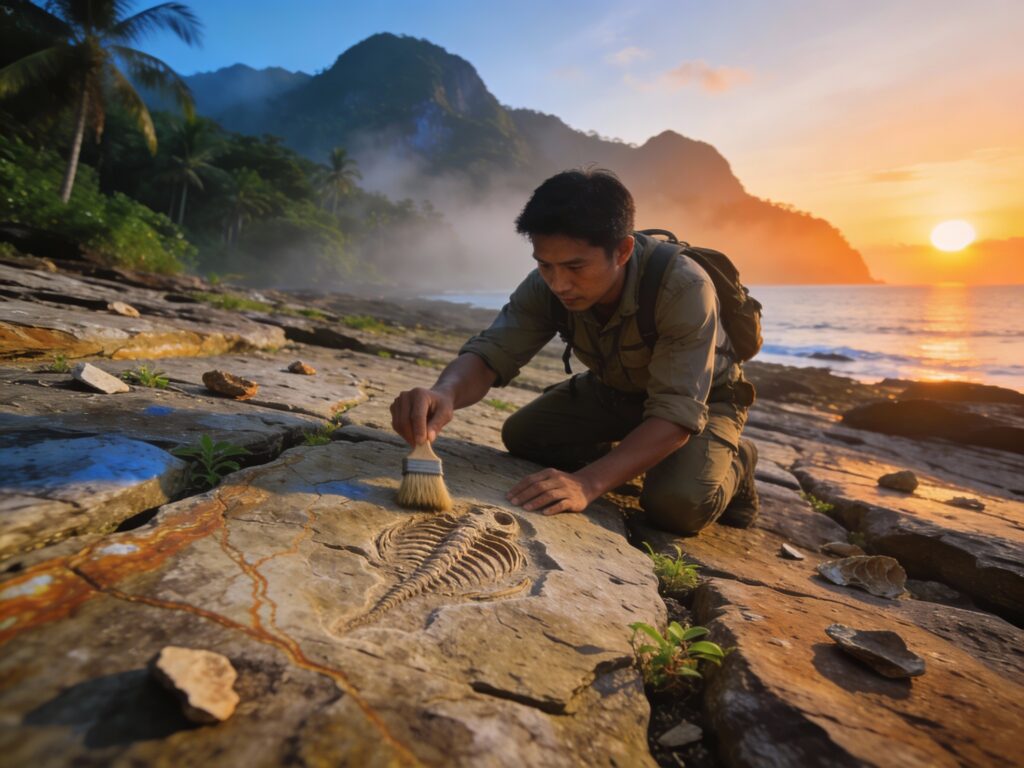
Chasing Time at Dawn: Unearthing Tarutao’s Ancient Whispers
Forget the well-trodden paths for a moment. Deep in Thailand’s south, where the Andaman Sea kisses the border with Malaysia, lies Satun – a province whispering tales older than the dinosaurs. And within its crown jewel, Tarutao National Park (a UNESCO World Heritage site!), an extraordinary adventure awaits: fossil hunting at dawn. This isn’t just a beach walk; it’s a journey 500 million years into the past.
Why Tarutao? A Portal to the Paleozoic
Tarutao isn’t just stunningly beautiful; it’s a geological treasure chest. The islands are part of the Satun UNESCO Global Geopark, recognized for its exceptional fossil record. The rocks here, primarily limestone and shale, were formed on the bed of an ancient tropical sea during the Ordovician and Cambrian periods – a time when complex life was exploding in the oceans, long before vertebrates conquered the land.
As tectonic forces lifted these ancient sea floors, they became the islands we see today. Erosion, particularly by the relentless sea, constantly exposes new layers, revealing the petrified remains of creatures that swam in primordial waters.
The Magic of the Dawn Hunt
Fossil hunting is rewarding any time, but dawn on Tarutao offers a uniquely potent experience:
- Low Tide Advantage: The receding tide, often at its lowest around dawn, reveals vast expanses of rocky shoreline and wave-cut platforms normally hidden underwater. This is prime fossil real estate!
- Cool Comfort: Beat the intense tropical heat. The cool, calm morning air makes exploration far more pleasant.
- Golden Light: The low-angle morning sun casts long, raking shadows across the rocks. This dramatically highlights the textures and outlines of fossils embedded in the stone, making them easier to spot.
- Serene Solitude: Experience the raw beauty of Tarutao in near silence, broken only by waves and birdsong, before other visitors arrive.
Where to Look: Tarutao’s Fossil Hotspots
While fossils can potentially be found on various islands, Ko Tarutao itself offers some of the most accessible and rewarding sites:
1. Ao Pante Malacca (Pante Bay)
This long, curving bay on the east coast is arguably the *best* spot for amateur fossil hunters. The extensive wave-cut platform exposed at low tide is littered with fossiliferous rocks. Wander slowly, eyes scanning the grey limestone and shale.
2. Ao Molae
Another bay on Ko Tarutao’s east coast, offering similar rocky platforms at low tide. It’s often less crowded than Ao Pante.
3. Other Rocky Shores
Anywhere exposed bedrock is visible along the coast, particularly on the eastern sides of islands within the park, holds potential. Ask national park rangers for current recommendations.
What You Might Find: Creatures Frozen in Stone
Keep your eyes peeled for these ancient marine inhabitants:
- Trilobites (The Stars!): These extinct arthropods, resembling horseshoe crabs with segmented bodies, are the most sought-after finds. Look for their distinctive oval or crescent shapes, often showing segments and sometimes even spines.
- Brachiopods (Lampshells): Abundant! These shelled creatures look like small clams but are unrelated. They often appear as symmetrical, ribbed impressions or actual shells preserved in the rock.
- Cephalopods: Ancestors of squid and nautilus. Look for straight or slightly curved conical shells, sometimes with internal chambers visible.
- Gastropods (Snails): Spiral shells preserved as casts or molds.
- Crinoids (Sea Lilies): Stalked echinoderms. You’re more likely to find individual disc-like segments of their stems (like tiny polo mints) or the delicate patterns of their calyxes (heads).
- Corals & Stromatolites: Evidence of ancient reefs and microbial mats.
Remember: Fossils are fragments of a giant puzzle. Finding a complete, museum-quality specimen is rare, but discovering even a small piece of a trilobite tail or a perfect brachiopod is incredibly exciting!
Essential Tips for Your Fossil Foray
- Timing is Everything: Check the tide times meticulously! Aim to arrive at your chosen beach at least 1-1.5 hours *before* low tide to maximize your exploration window. Dawn low tides are ideal.
- Footwear is Crucial: Sturdy, closed-toe water shoes or reef walkers with excellent grip are non-negotiable. The rocks are sharp, slippery with algae, and uneven.
- Protection: Wear a hat, light long sleeves, and high-SPF reef-safe sunscreen. Bring plenty of water.
- Eyes Over Tools: Your best tools are patience and a keen eye. A small magnifying glass can be helpful. Hammers and chisels are strictly forbidden within the national park. Collecting loose fragments *might* be tolerated in some areas, but never prise fossils from bedrock. Take only photos, leave only footprints (and take your trash!).
- Camera: Essential for documenting your finds in situ. Macro settings are great for small fossils.
- Guide Knowledge: Consider hiring a local national park ranger or a guide familiar with fossil locations and identification. They enhance the experience significantly.
- National Park Fees & Permits: Pay the Tarutao National Park entry fee. Overnight stays require booking accommodation or campsites in advance, especially in high season.
- Getting There: Access Tarutao via ferry from Pak Bara Pier in Satun mainland. Plan your transport and accommodation carefully.
A Journey Through Deep Time
Fossil hunting at dawn on Tarutao isn’t just a quirky activity; it’s a profound connection to Earth’s deep history. As the first rays of sun illuminate the ancient stones, and your fingers trace the outline of a creature that lived half a billion years ago, you’re not just on a beach in Thailand – you’re holding a piece of a lost world. It’s a humbling, exhilarating experience that transforms a visit to Satun into an unforgettable voyage through time. Pack your sense of wonder, respect the fragile environment, and prepare to be amazed by Tarutao’s stone secrets.