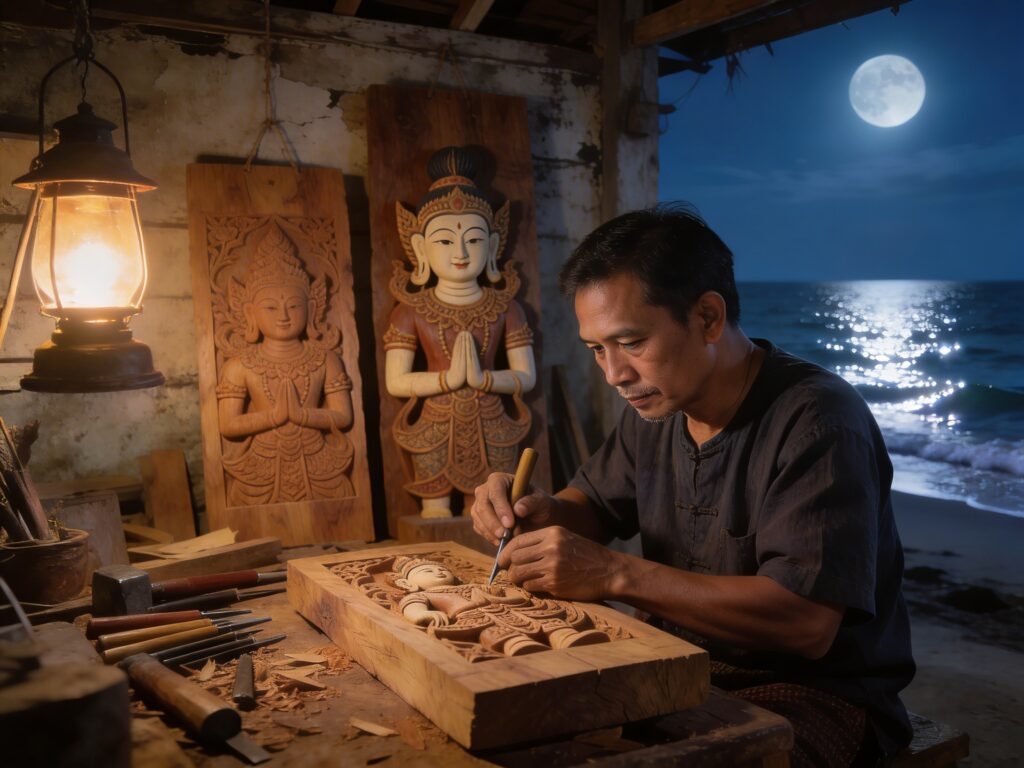
Songkhla’s Teak Phantom Craft: Carving Ancient Epics with Moonlit Puppeteers in Seaside Heritage Studios
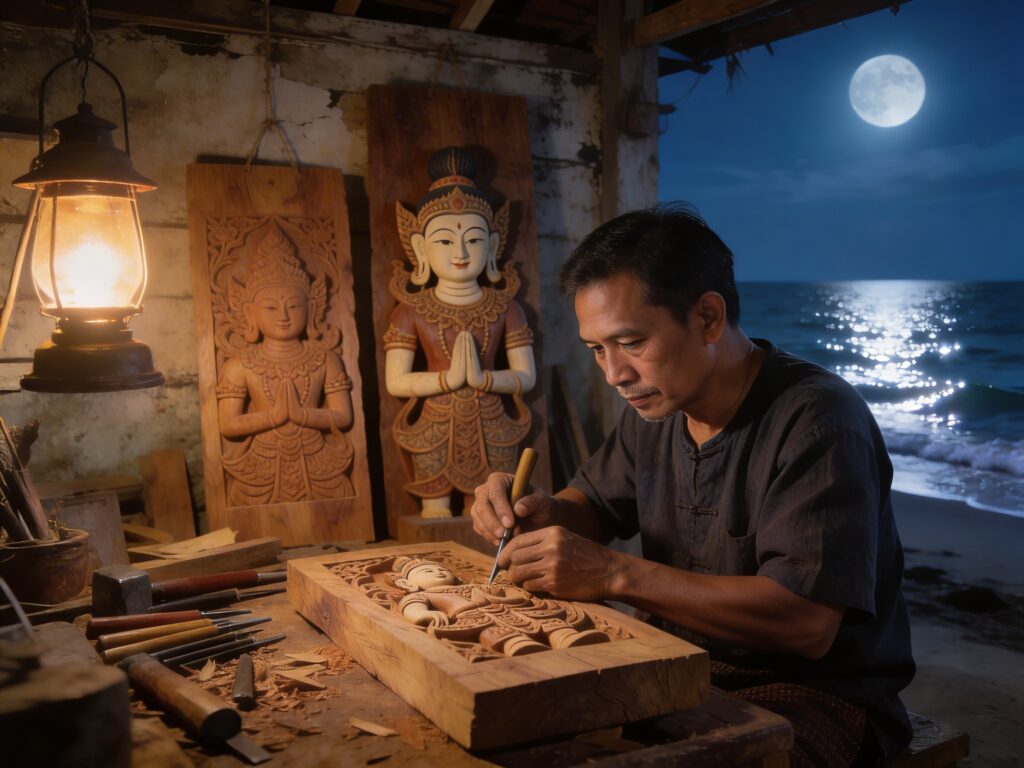
Where Ancient Tales Dance in Leather and Light
Beyond Songkhla’s bustling markets and sun-drenched beaches lies a world where history whispers through thin sheets of leather, where master craftsmen breathe life into heroes and demons, and where moonlight spills onto stages where epic battles unfold. This is the realm of Nang Talung, Southern Thailand’s captivating shadow puppet theatre, and Songkhla is one of its beating hearts. Here, the legacy of the ‘Teak Phantom Craft’ isn’t just preserved; it’s passionately lived.
The Artisan’s Alchemy: Carving Epics from Hide
Step into one of Songkhla’s heritage studios, often tucked away in traditional wooden houses near the old town or along quieter coastal stretches. The air hums with quiet concentration and the rhythmic tap-tap-tapping of tiny chisels. This is where the magic begins – not with wood, as the evocative name “Teak Phantom” might suggest, but with meticulously prepared buffalo or cow hide. Skilled chang nang (puppet masters/craftsmen) transform these raw skins into translucent canvases through a laborious process of curing, scraping, and smoothing.
Then comes the true artistry: the carving. Guided by generations of knowledge and intricate stencils passed down like sacred heirlooms, artisans etch figures from the Ramakien (the Thai Ramayana), local folklore, Jataka tales, and historical chronicles. Every flick of the wrist matters:
- Piercing Precision: Fine chisels create elaborate patterns – the scales of a Naga, the intricate jewelry of a princess, the fierce expression of a demon king (Tosakanth). These perforations aren’t just decorative; they define the character’s silhouette when lit.
- Dynamic Detailing: Puppets are articulated wonders. Limbs move independently via bamboo rods, allowing for fluid battles, graceful dances, and comedic tumbles. A single complex character, like Hanuman the Monkey God, might require multiple rods.
- Subtle Symbolism: Colors, derived from natural pigments or modern dyes, add layers of meaning. Gold signifies royalty, green for forest spirits, red for power or anger. The craftsmanship is a visual language.
Moonlit Stages: Where Puppeteers Become Storytellers
As dusk settles over Songkhla and the scent of the sea mingles with the evening air, the heritage studios or makeshift stages come alive. A large white screen is stretched taut. Behind it, the nang nai (principal puppeteer) and their assistants take their positions. An oil lamp or a modern equivalent casts its warm, flickering glow.
This is where the carved phantoms truly earn their name. Held aloft against the screen, the intricately pierced leather transforms into luminous spectres. The puppeteers are not merely operators; they are actors, musicians, comedians, and directors rolled into one:
- Masterful Manipulation: With astonishing dexterity, the nang nai controls multiple rods simultaneously, making puppets leap, fight, swoon, and gesticulate with startling realism.
- Voices of the Multitude: Using a distinctive, high-pitched vocal technique and a repertoire of voices, the puppeteer embodies every character – from the noble hero Phra Ram to the bumbling clown, often injecting sharp social commentary or local gossip.
- Orchestrating the Drama: A small ensemble provides the soundtrack – the hypnotic pulse of the pi (oboe), the driving rhythm of the taphon (drum), the shimmer of cymbals – perfectly synchronized with the action on screen.
Under the moonlight, often near the gentle lapping of the Gulf, the performance becomes a communal ritual. Locales gather, children watch wide-eyed, and ancient epics resonate with timeless themes of love, duty, betrayal, and the triumph of good over evil.
Seaside Heritage: Keeping the Phantom Flame Alive
Songkhla’s connection to Nang Talung runs deep. The city, with its rich maritime history and cultural crossroads, has long been a hub for this art form. Heritage studios like those associated with esteemed masters or family lineages (such as the Siriwat or Chaiyasit families, though specific studios may vary) are vital repositories of knowledge.
Visiting these studios offers a profound glimpse:
- Witness Creation: See craftsmen painstakingly carving and painting, understanding the immense skill required for each puppet.
- Hear the Stories: Learn about the symbolism, the narratives, and the challenges of preserving this intricate art in the modern world.
- Experience Intimacy: Smaller studio performances offer a more personal connection than larger shows, allowing you to appreciate the puppeteers’ artistry up close.
Seeking out Songkhla’s Nang Talung is more than just watching a show; it’s stepping into a living tradition where leather becomes legend, puppeteers are poets, and the spirit of ancient Thailand dances in the flickering, moonlit shadows by the sea.